
Trichological Approach to PMOS Hair Loss, Previously PCOS
Key Summary
Polyendocrine Metabolic Ovarian Syndrome (PMOS), previously known as Polycystic Ovary Syndrome (PCOS), is a hormonal and metabolic condition that may be associated with changes in scalp hair. Medical professionals manage the wider condition, while a trichologist focuses on identifying the type of hair loss present and assessing the condition of the hair, scalp and follicles.
Hair thinning can be one of the most emotionally difficult symptoms associated with PMOS. It can affect confidence, styling choices and how comfortable someone feels in everyday situations.
PMOS became the new name for PCOS in May 2026. The updated terminology reflects the wider endocrine and metabolic nature of the condition rather than focusing mainly on the ovaries. Both terms may continue to be used while the new name becomes more familiar.
Why Can PMOS Affect Hair Growth?
Androgens are hormones naturally produced by women. In some people with PMOS, changes in androgen activity or the sensitivity of the hair follicles may be associated with gradual thinning.
Visible changes may include:
- A widening parting
- Reduced density around the crown
- Finer or shorter hairs
- A gradual reduction in overall volume
This may resemble female pattern hair loss, which can occur alongside conditions associated with increased androgen levels.
However, a diagnosis of PMOS does not automatically explain every change in the hair. Diffuse shedding, pattern thinning and scalp conditions can appear similar without a detailed assessment. More than one issue may also be present at the same time.
The Medical Picture
PMOS is an endocrine and metabolic condition. Its diagnosis and medical management sit with an appropriate healthcare professional, such as a GP, gynaecologist or endocrinologist.
Their role may include considering hormonal symptoms, menstrual history, metabolic health and the wider effects of the condition.
Many patients visit Sussex Hair Clinic after PMOS or PCOS has already been identified. The remaining question is often not whether they have the condition, but what is happening to their hair and whether PMOS fully explains the changes they are experiencing.
The Hair and Scalp Picture
PMOS is an endocrine and metabolic condition. Hair and scalp concerns are not always examined in detail during routine medical care for PMOS. This is where a trichological assessment has a different role.
A consultation can help clarify what condition you are experiencing, therefore the best bespoke treatment for you. You may have complaints including:
- Specific thinning hair in one area.
- shedding
- Scalp inflammation
- Another hair or scalp complaint
Two people with PMOS may experience very different concerns. One may notice gradual thinning around the parting, while another may see increased shedding throughout the scalp. A separate scalp condition may also be present.
Identifying the type and pattern of hair loss allows the concern to be considered as an individual issue rather than assuming that PMOS is the only cause.
What Happens During a Trichology Consultation?
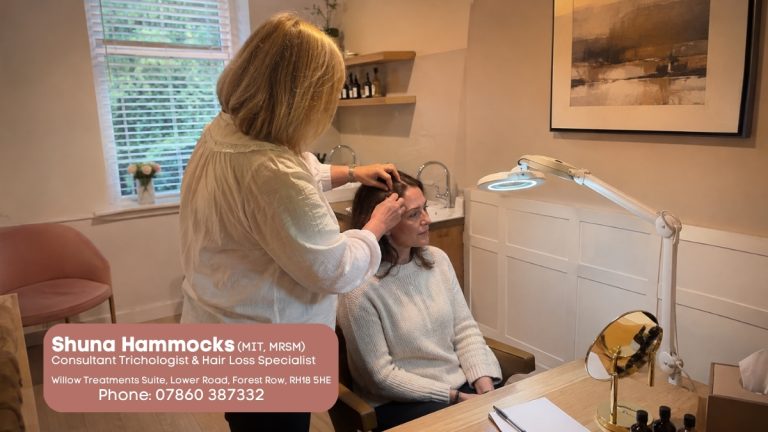
At Sussex Hair Clinic in Forest Row, Consultant Trichologist Shuna Hammocks provides a calm, private and professional consultation.
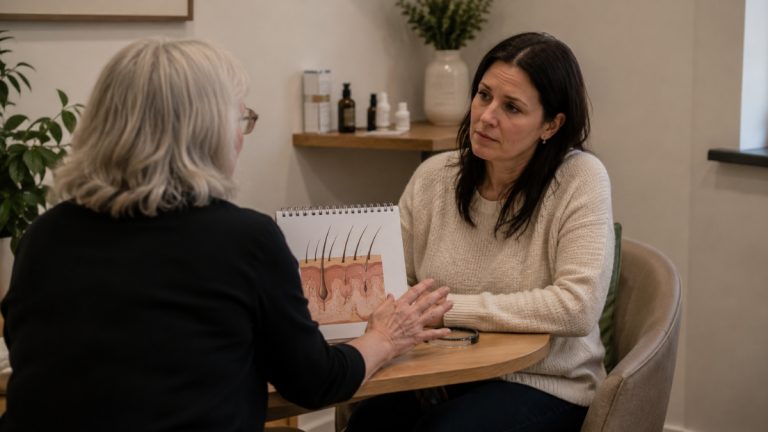
Shuna deeply listens to your story: when the hair changes began, how they have progressed and how they are affecting you. The consultation also considers your medical and family history, PMOS diagnosis, medicines, stress, diet, supplements, cleansing routine and the products used on your hair and scalp.
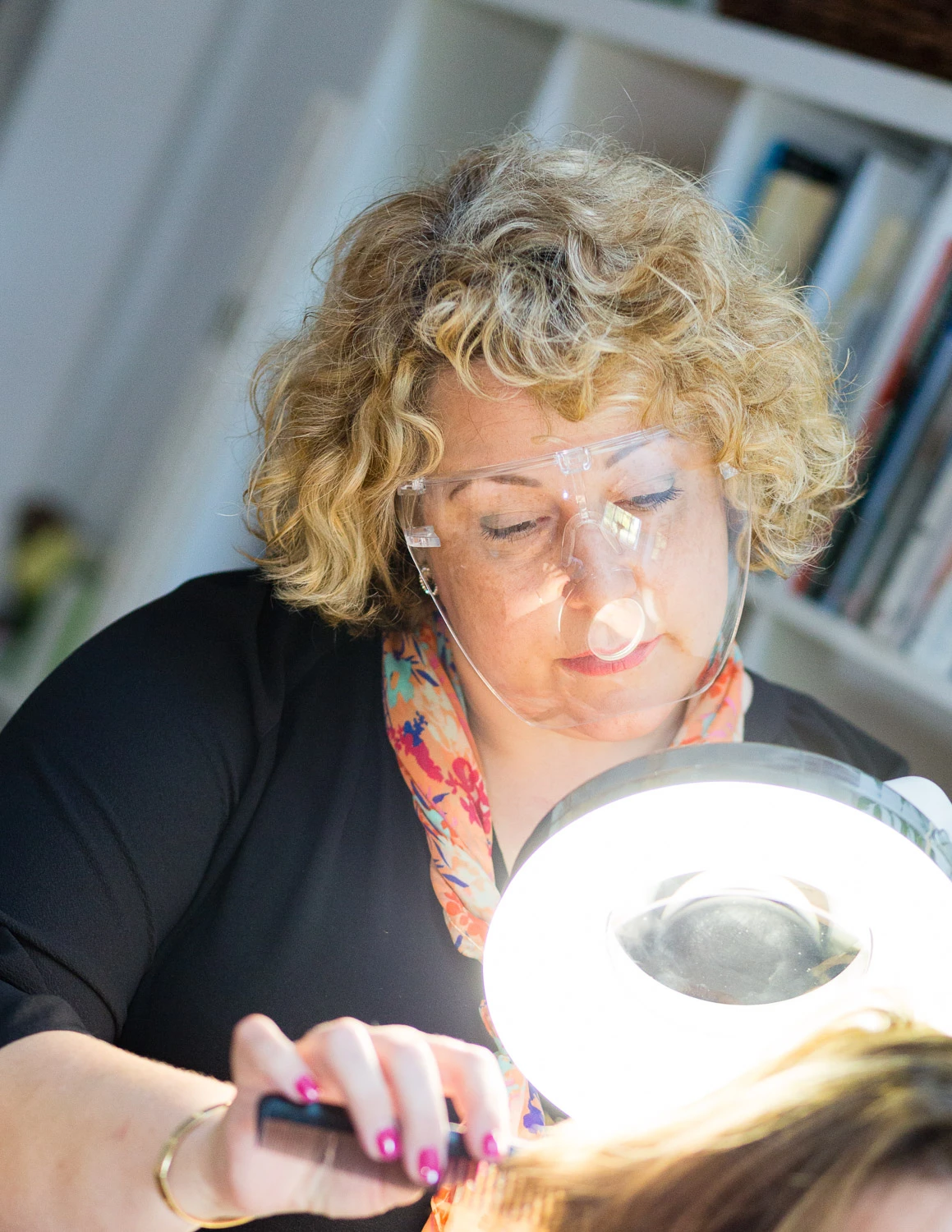
The hair and scalp are examined under magnification to assess density, breakage, inflammation and visible changes around the follicles.
This detailed assessment focuses on the area that may not have been fully explored during the medical management of PMOS: the specific hair-loss condition and the health of the scalp and follicles, as well as ways to prevent future damage to the hair. Shuna is the appropriate person to support you.
To arrange a consultation with Shuna Hammocks, call 07860 387 332 or make an appointment through Sussex Hair Clinic.
Clinical Sources Reviewed
This article was written and reviewed by Shuna Hammocks, Consultant Trichologist. Member of The Institute of Trichologists (MIT), registration number 10060.
Clinical sources reviewed include the international naming consensus published in The Lancet, NHS guidance on Polyendocrine Metabolic Ovarian Syndrome and British Association of Dermatologists information on female pattern hair loss.
This article is for educational purposes. It does not provide individual advice, a diagnosis or a treatment plan, and it does not replace care from your GP, gynaecologist, endocrinologist, dermatologist or another qualified healthcare professional.