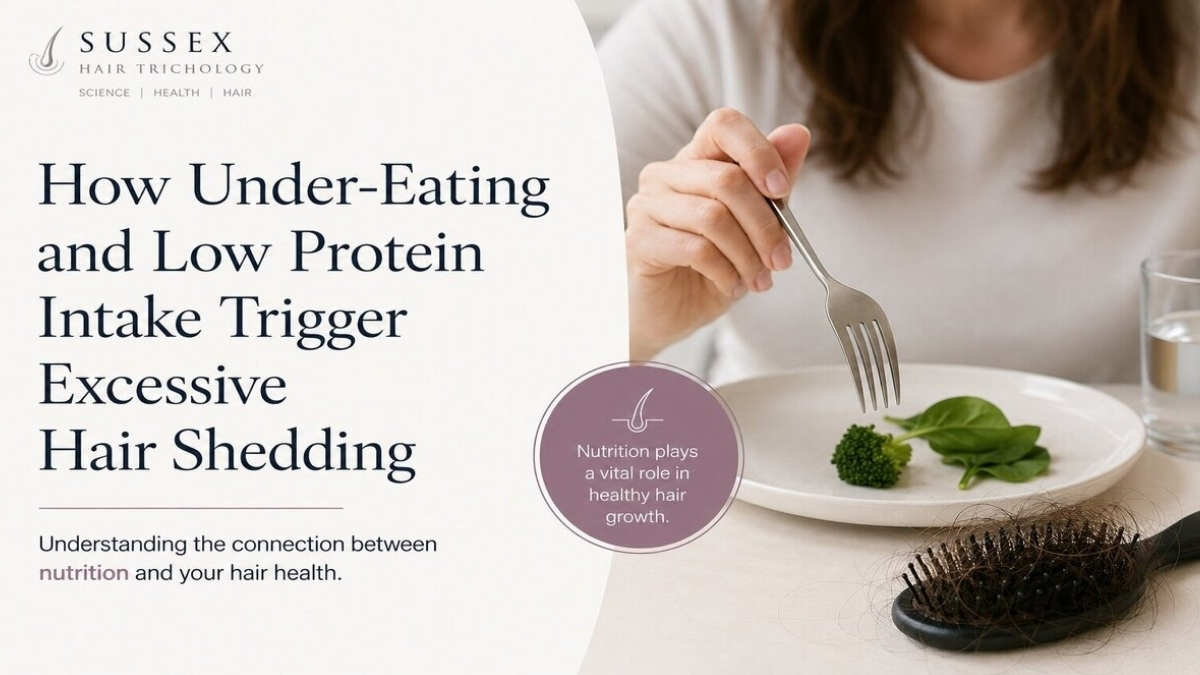
How Under-Eating and Low Protein Intake Can Affect Hair and Possibly Cause Shedding
Summary
Under-eating and severe calorie restriction place significant physical stress on the body, which can trigger a period of increased hair fall. While low protein intake is often blamed, it is rarely the only nutritional factor at play. Diet-related shedding typically appears weeks or even months after a shift in your eating habits. Because hair loss is complex and multi-faceted, understanding your timeline, loss pattern, and health history is essential to finding the true cause.
When patients come to my clinic worried about sudden hair shedding, I always look beyond the scalp. Your hair serves as a delicate barometer for your internal health; changes in nutrition, body weight, and daily stress can all leave their mark.
Hair growth requires a steady supply of energy and vital nutrients. When your body experiences physical or nutritional stress, it naturally prioritises essential organs over non-essential functions like hair production.
Can Low Protein Cause Hair Loss?
No, not as such. But it can massively affect your body’s ability to store certain vitamins, and therefore deficiencies can contribute to hair loss. Protein supplies the necessary amino acids required to build strong hair fibres. However, in my clinical experience, I never assume that every patient experiencing loss is simply protein-deficient.
The reality is usually broader. When someone restricts their diet, they often consume fewer total calories and miss out on a wide spectrum of micronutrients. In these situations, the hair is reacting to general physical strain rather than a lack of protein alone.
How Under-Eating Disrupts the Hair Cycle
One of the most common responses to nutritional stress is a condition known as telogen effluvium. This occurs when a higher-than-normal percentage of hair follicles are pushed prematurely into the resting (and subsequently shedding) phase of the growth cycle.
Common triggers include:
- Rapid or significant weight loss
- Restrictive diets or sudden calorie deficits
- Inadequate daily protein or nutrient intake
Crucially, shedding rarely starts the day you change your diet. Because of how the hair cycle operates, there is usually a delay.
Recognising Diffuse Hair Loss
You might notice increased fall:
- In the shower drain or during washing
- Left on your pillow or clothing throughout the day
- Trapped in your hairbrush or caught between your fingers when styling
While a general loss of hair volume can be distressing, these signs are not unique to protein deficiency. Telogen effluvium shares symptoms with several other conditions, which is why a careful clinical assessment is so important.
Protein Is Only One Piece of the Puzzle
It is easy to focus on a single nutrient when searching for answers, but hair health relies on a balanced environment. Key micronutrients like iron, zinc, and vitamin D play equally important roles.
Furthermore, more isn’t always better. Over-supplementing certain nutrients can actually trigger or worsen hair fall. Rather than treating hair loss as proof of a specific deficiency, I evaluate nutrition as one component of your overall health.
What I Look For During a Consultation
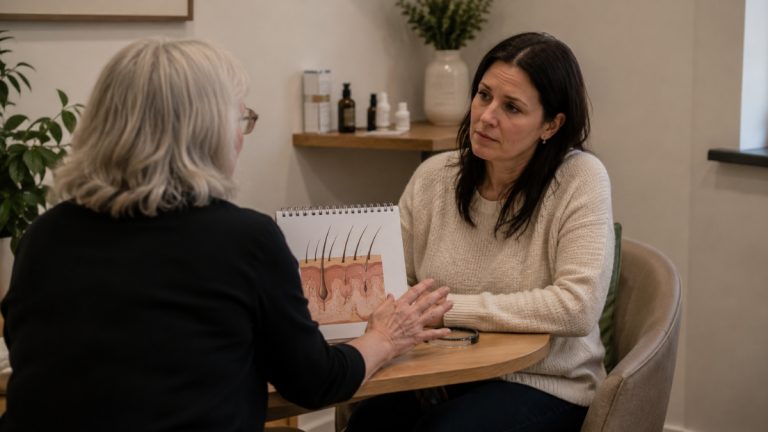
During a trichological assessment, we map out the months leading up to your symptoms. Establishing a clear timeline allows us to connect past events, such as weight changes, illness, acute emotional stress, or dietary shifts to your current hair cycle.
You might experience temporary, diet-related shedding alongside an underlying condition like genetic pattern thinning. Identifying all contributing factors ensures we create a plan that genuinely supports your hair’s long-term health.
Not sure what is behind your hair shedding?
At Sussex Hair Clinic, I provide comprehensive, empathetic consultations to uncover the root cause of your hair and scalp concerns. Book Your Consultation Online or call us directly on 07860 387 332 to take the next step.
FAQs: Protein, Under-Eating and Hair Shedding
Can low protein intake cause hair shedding?
Indirectly, it can; it can lead to poor-quality hair that breaks easily. Severe or prolonged protein deficiency can contribute to excessive hair shedding, particularly alongside under-eating or weight loss.
How long after under-eating can hair shedding begin?
Shedding may become noticeable several weeks or months after significant dietary restriction or weight loss.
Does diet-related hair shedding affect the whole scalp?
Always yes. Nutritional shedding is usually diffuse, affecting hair across the scalp rather than one specific area.