
Choosing Between a GP, Dermatologist, and Trichologist for Hair Loss
Hair loss can be upsetting enough without the extra stress of which professional deals with which part of the problem.
A GP, dermatologist and trichologist can all have a role in hair-loss concerns, but their areas of focus are different. In many cases, their work complements rather than replaces one another.
What Role Does a GP Have in Hair Loss?
A GP considers hair loss as part of wider health from an orthodox viewpoint.
Hair shedding or thinning can sometimes be associated with illness, stress, medicines, hormonal changes or other medical factors. A GP may consider what NHS treatments may be appropriate.
Appointment time: 10 minutes.
What Does a Dermatologist Do?
A dermatologist is a medically qualified doctor who you could be referred to. These Doctors specialise in skin conditions and since the hair follicle extends from here, some have a special interest in hair loss too.
Their role would mostly be focusing on the scalp skin and the involvement of hair-loss conditions, inflammatory scalp disease, autoimmune conditions and scarring forms of alopecia. Sometimes they carry out scalp biopsy where clinically appropriate.
Within the NHS, access to specialist dermatology commonly involves referral according to clinical need and the pathway used by the relevant service.
Appointment time: 15-20 minutes.
What Does a Trichologist Do?
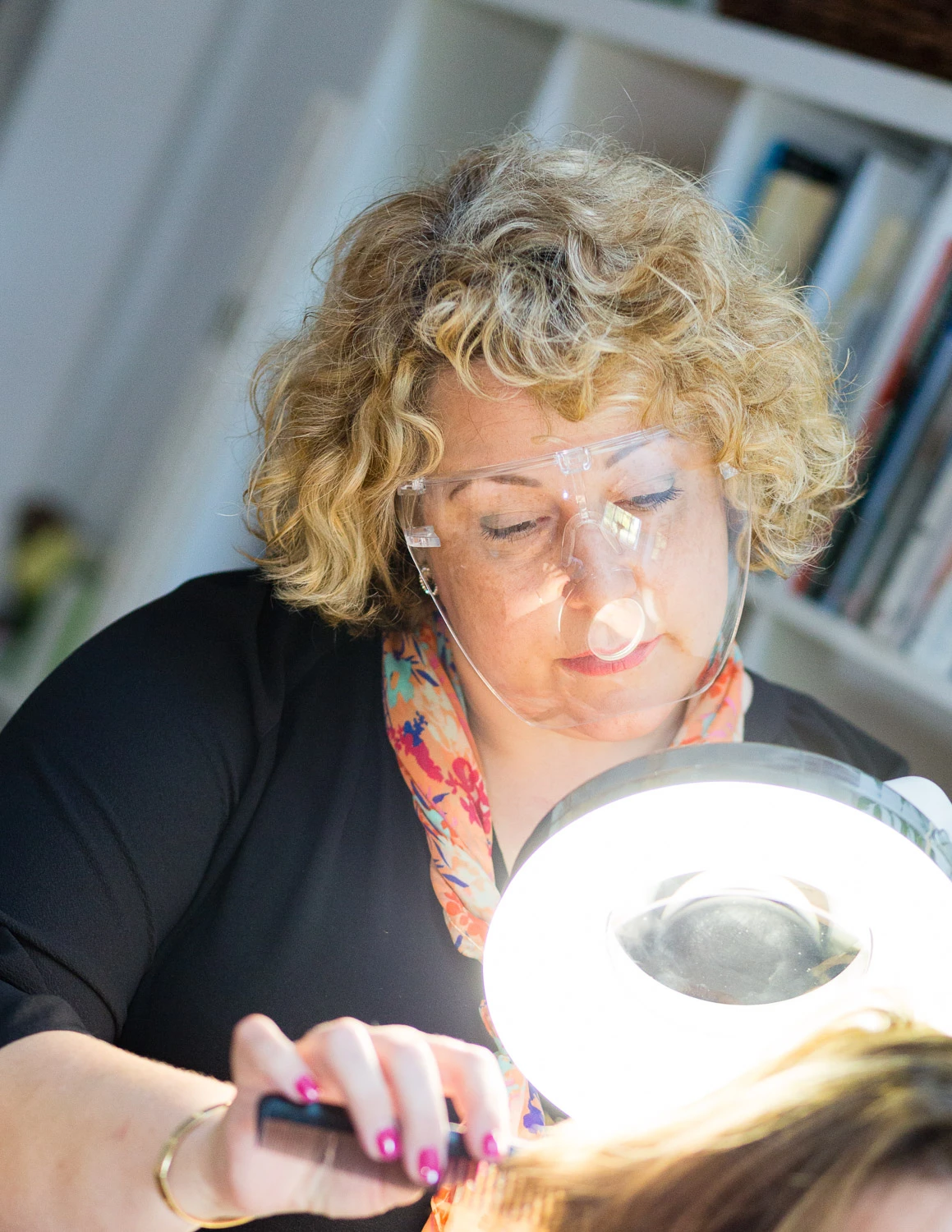
A trichologist specialises specifically in the hair and scalp, often from a holistic viewpoint. They exclusively address these concerns every day and as such have the utmost compassion for those suffering.
Registered trichologists’ diploma training focuses on disorders affecting the hair and scalp. The Institute of Trichologists states that registered members work within their area of competence and involve medical professionals where blood tests, biopsies or prescribed medicines are required. Trichologists are often referred to as a GP’s eyes and ears, as certain hair issues, for example, may present in trichological consultation first that could result in the trichologist requesting thyroid blood tests before symptoms were presented to the GP.
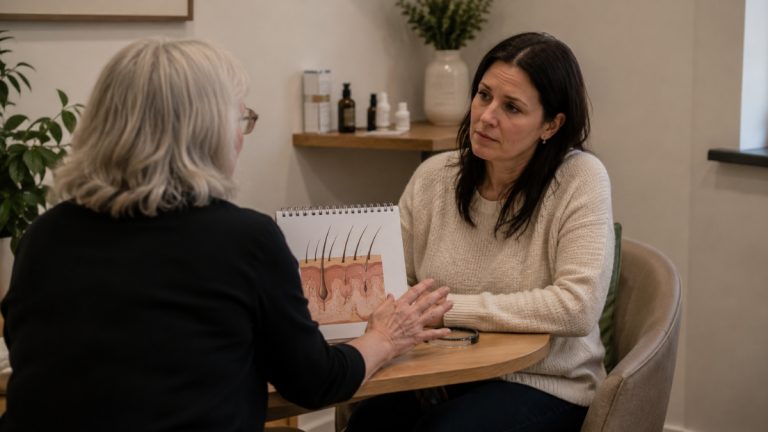
A trichology consultation time: 60 minutes.
GP
General health. An initial conversation of around 10 minutes, with referral on where appropriate.
Dermatologist
Skin and scalp specialist. Appointments typically run 15–20 minutes.
Trichologist
Hair and scalp specialist. A consultation typically lasts 60 minutes.
When a Hair Loss Consultation Gives Support and Clarity
Many people come to Sussex Hair Clinic having already spoken with their GP but still wanting to understand what type of hair loss they are experiencing.
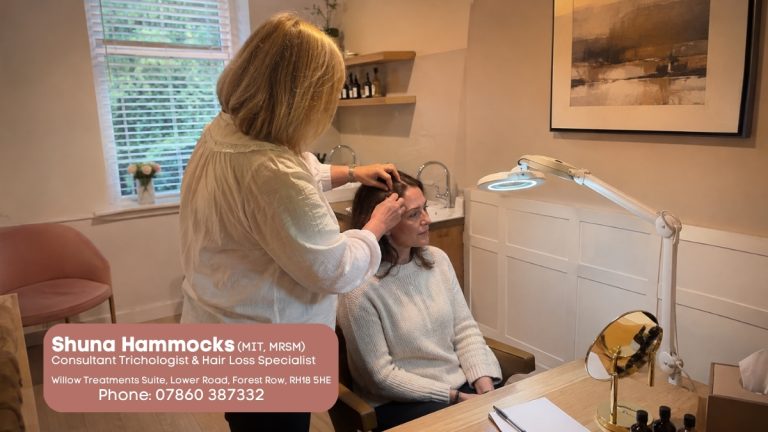
At the Forest Row clinic, Consultant Trichologist Shuna Hammocks (MIT, MRSM) reviews the history and pattern of the hair loss alongside relevant medical history, medicines, stress, family history and scalp condition. The hair and scalp are then examined as part of the diagnostic process.
Book Your Consultation at Sussex Hair Clinic
Appointments with Consultant Trichologist Shuna Hammocks (MIT, MRSM) are available at the Forest Row clinic.
- Clinic Address: Willow Treatments Suite, Lower Road, Forest Row, RH18 5HE (Find us on Google Maps)
- Phone: 07860 387332
Sussex Hair Clinic also sees patients travelling from across Sussex, Kent and Surrey.
Frequently Asked Questions
Can a GP help with hair loss?
A GP can consider hair loss alongside wider health factors and may arrange medical investigations or specialist referral where appropriate.
Should I see a dermatologist for hair loss?
Dermatologists are medical doctors specialising in skin, hair and scalp disorders. Their role is particularly relevant where investigation or prescribing medicines the GP can not.
Can a trichologist identify hair loss?
Yes, this is their specialism! Qualified trichologists, like Shuna Hammocks, can assess the pattern, history, hair and scalp to help clarify the type of hair-loss concern present.
Clinical Sources Reviewed
This article was clinically reviewed by Shuna Hammocks, Consultant Trichologist, Member of The Institute of Trichologists (MIT), registration number 10060, before publication. Her current Institute membership details are also listed on the Sussex Hair Clinic website.
Clinical sources reviewed include NHS guidance on hair loss and specialist referrals, The Institute of Trichologists guidance on the role and scope of registered trichologists, and UK dermatology information relating to hair-loss assessment.
This article is for educational purposes. It does not provide individual advice, a diagnosis or a treatment plan.