
What is Lupus & Scarring Alopecia?
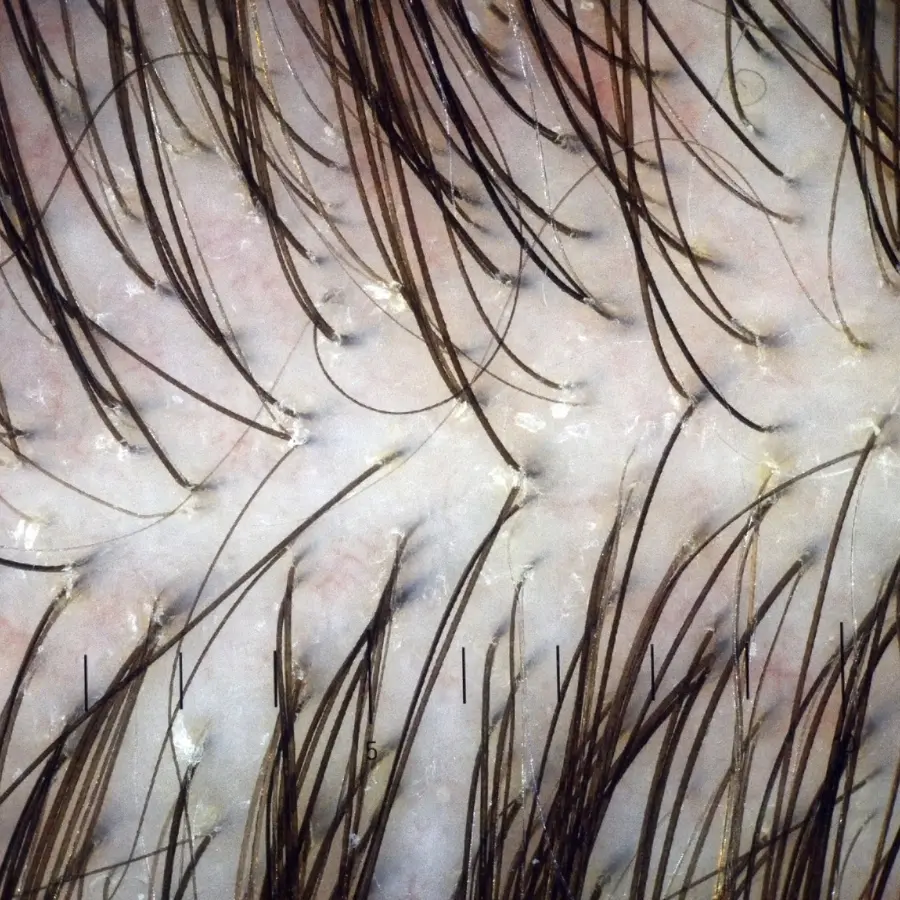
Systemic Lupus Erythematosus (SLE) and Discoid Lupus can cause lesions on the scalp. These conditions carry a high risk of scarring, known clinically as Cicatricial Alopecia.
Scarring alopecia behaves differently from most other hair loss: once a follicle is replaced by scar tissue, it cannot regrow hair. That makes early recognition especially important, so any active inflammation can be addressed before the damage becomes permanent.

Most common signs of scarring alopecia
Patches that don’t regrow
Hair loss in a fixed area that stays the same or slowly spreads, rather than recovering on its own.
Redness or scaling
Active inflammation around the edge of a patch, often the sign that scarring is still progressing.
Smooth, shiny scalp
Once scarring is established, the skin can look unusually smooth with no visible follicle openings.
Lesions on sun-exposed skin
Discoid lesions elsewhere on the face or ears alongside scalp changes is a lupus-specific clue.
Who Lupus & Scarring Alopecia affects
Discoid Lupus and Systemic Lupus Erythematosus can affect anyone, though they’re most commonly diagnosed in women, often alongside other autoimmune conditions. Because the underlying disease is systemic, scalp changes are only one part of a bigger picture that needs monitoring alongside:
- Sun exposure or photosensitivity
- An existing autoimmune diagnosis
- Family history of Lupus
- Joint or skin symptoms elsewhere
Why early assessment matters
Early identification and cooperation with your rheumatologist are vital to preserving hair follicles that haven’t yet been affected.
Scalp assessment & trichoscopy
We examine the scalp and document the pattern and extent of any scarring, giving a clear baseline to track changes over time.
Working with your specialist
Because Lupus is a systemic condition, we work alongside your GP, dermatologist or rheumatologist rather than in place of them, supporting the medical management of your diagnosis.
Local clinic for Sussex & Kent
You don’t have to navigate this alone. We regularly treat patients from East and West Sussex, Surrey, and Kent, including Horsham, Crawley, Brighton, and Tunbridge Wells, working alongside your existing medical team.
Related conditions
Other scalp conditions we treat
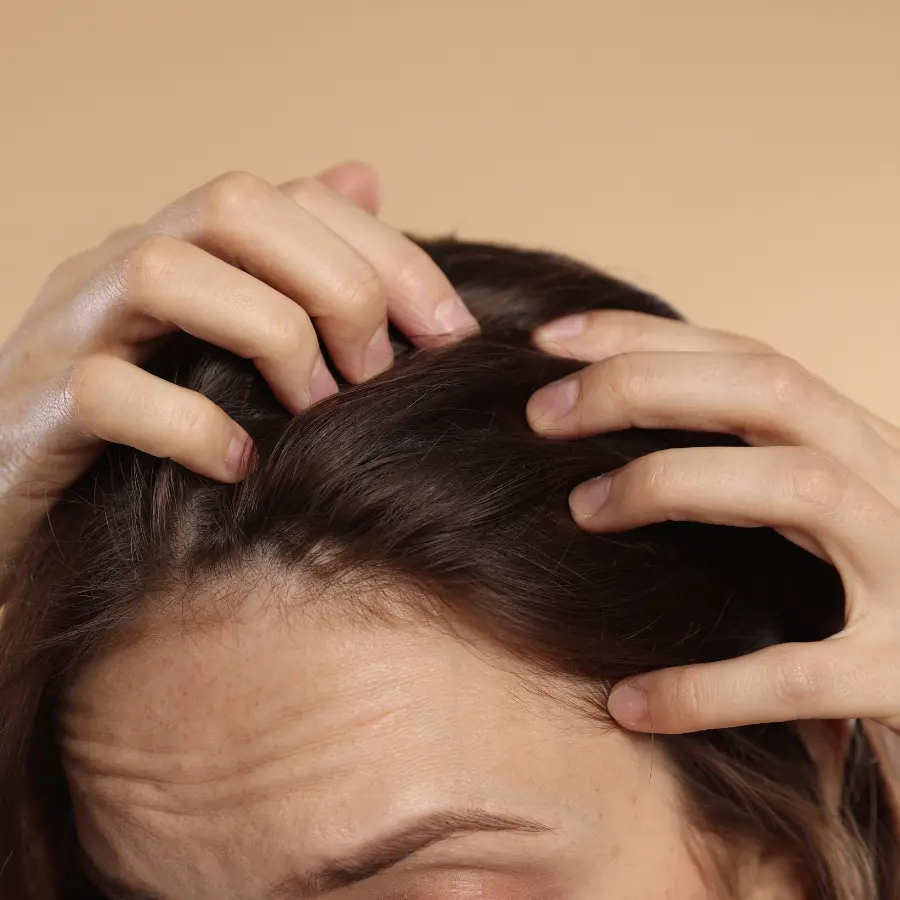
Seborrhoeic Dermatitis
Often confused with dandruff, this chronic inflammatory condition presents as red, itchy skin covered by greasy, yellowish scales.
Read more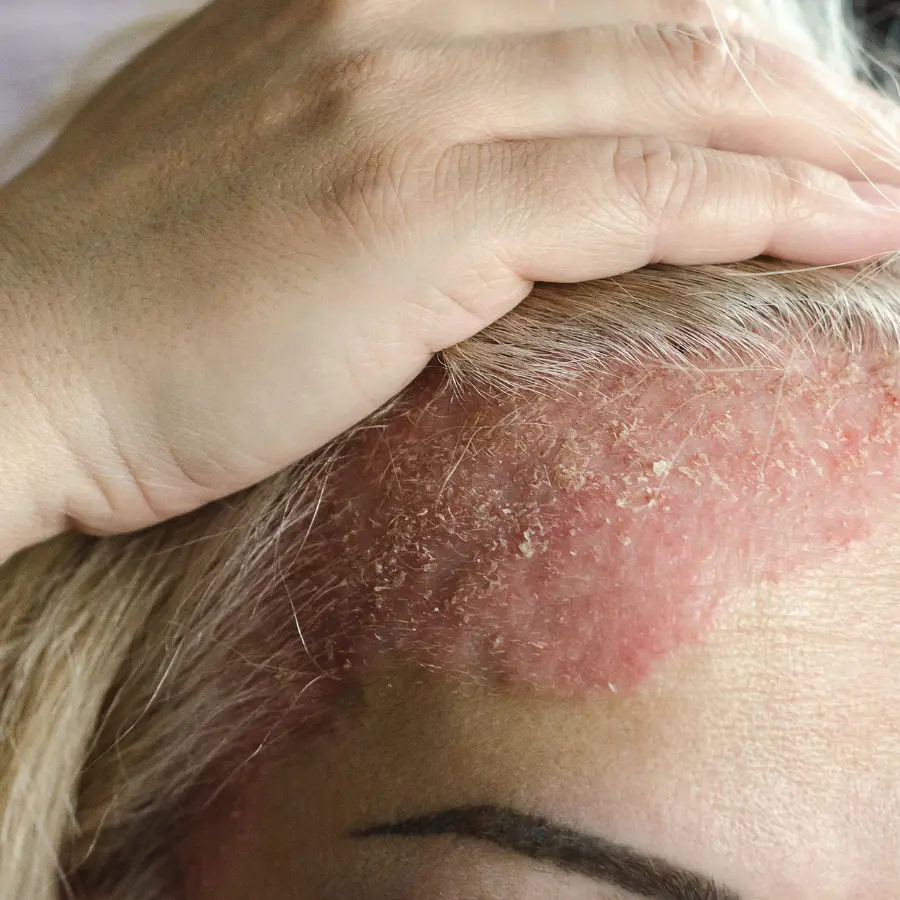
Scalp Psoriasis
An autoimmune condition that causes the rapid buildup of skin cells, creating thick, silvery scales and dry, red patches.
Read more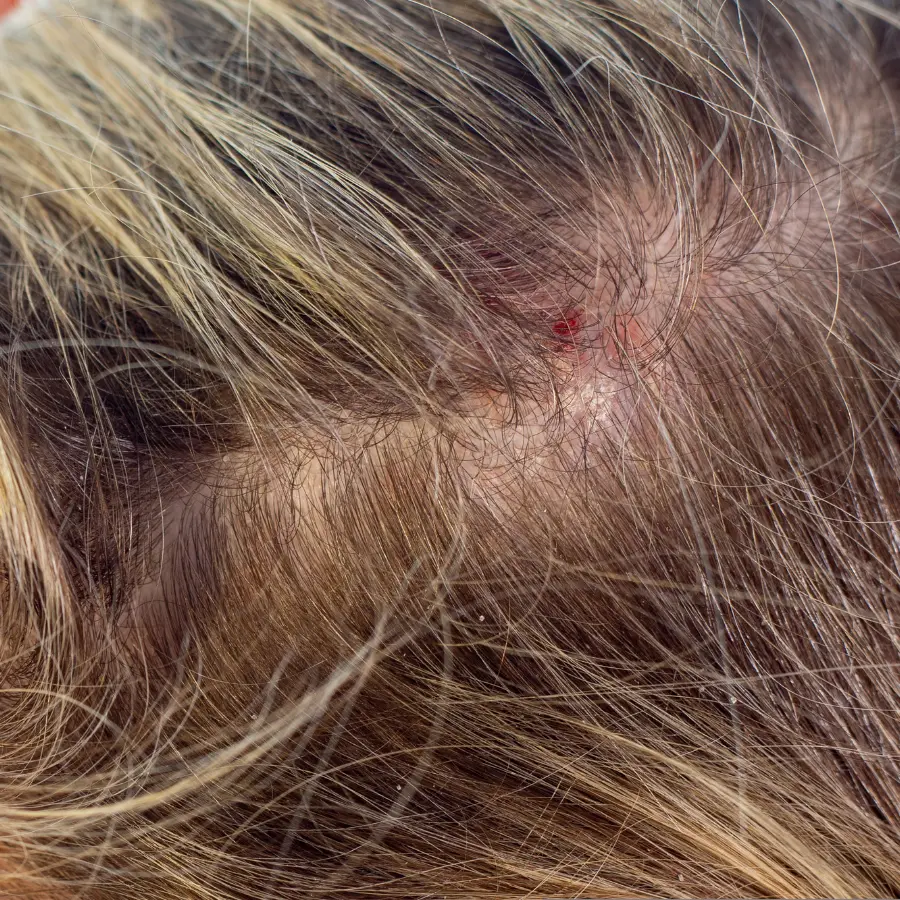
Scalp Eczema (Atopic Dermatitis)
If you have eczema elsewhere on your body, it can also affect your scalp, presenting as dry, intensely itchy, inflamed skin.
Read moreProtect your remaining follicles
Book a scalp assessment alongside your existing medical care.