Itchy Scalp and Hair Loss: What Could Be Causing Both?
When an itchy scalp seems to be accompanied by extra hair in the shower or on your brush, it is natural to worry that the itching is causing hair loss.
The connection between an itchy scalp and hair loss is not always direct. Itching alone does not damage healthy follicles. However, repeated scratching can break hairs and injure the scalp, while the inflammation or infection behind the itch may also affect normal hair growth.
An itchy, flaky or sore scalp can have several causes, so it is important not to guess.
Can an Itchy Scalp Cause Hair Loss?
Sometimes, but many different processes may be involved, such as:
Irritation can make the scalp feel itchy, hot or as if something is moving. Hair loss may occur, and scratching, particularly towards the end of the day, could be experienced.
Inflammation occurs in conditions such as seborrhoeic dermatitis, eczema and psoriasis and others. It may contribute to temporary shedding. Scalp psoriasis can sometimes cause hair loss, but the hair will normally grow back when the inflammation and scaling improve.
Autoimmune scalp/hair loss: This could be a condition which appears as a scalp condition, similar to eczema but leads to permanent hair loss. This needs to be treated asap.
Common Reasons for Scalp Itching and Hair Falling Out
Several conditions can produce similar symptoms:
- Dandruff or seborrhoeic dermatitis: commonly causes itching, redness and white or greasy flakes.
- Scalp psoriasis: may cause thick scale, soreness, tightness or burning.
- Scalp eczema or contact irritation: can follow exposure to fragrance, preservatives, bleach, dye or another product. Intense itching and pain are often caused.
- Tinea capitis, or scalp ringworm: is a fungal infection that may cause scaling, itching and patchy hair loss.
- Inflammatory or scarring hair-loss conditions: these are less common, but itching accompanied by pain, burning, or shiny areas of scalp needs prompt assessment.
What Happens During a Trichology
A consultation should be calm, private and focused on a professional but holistic approach.
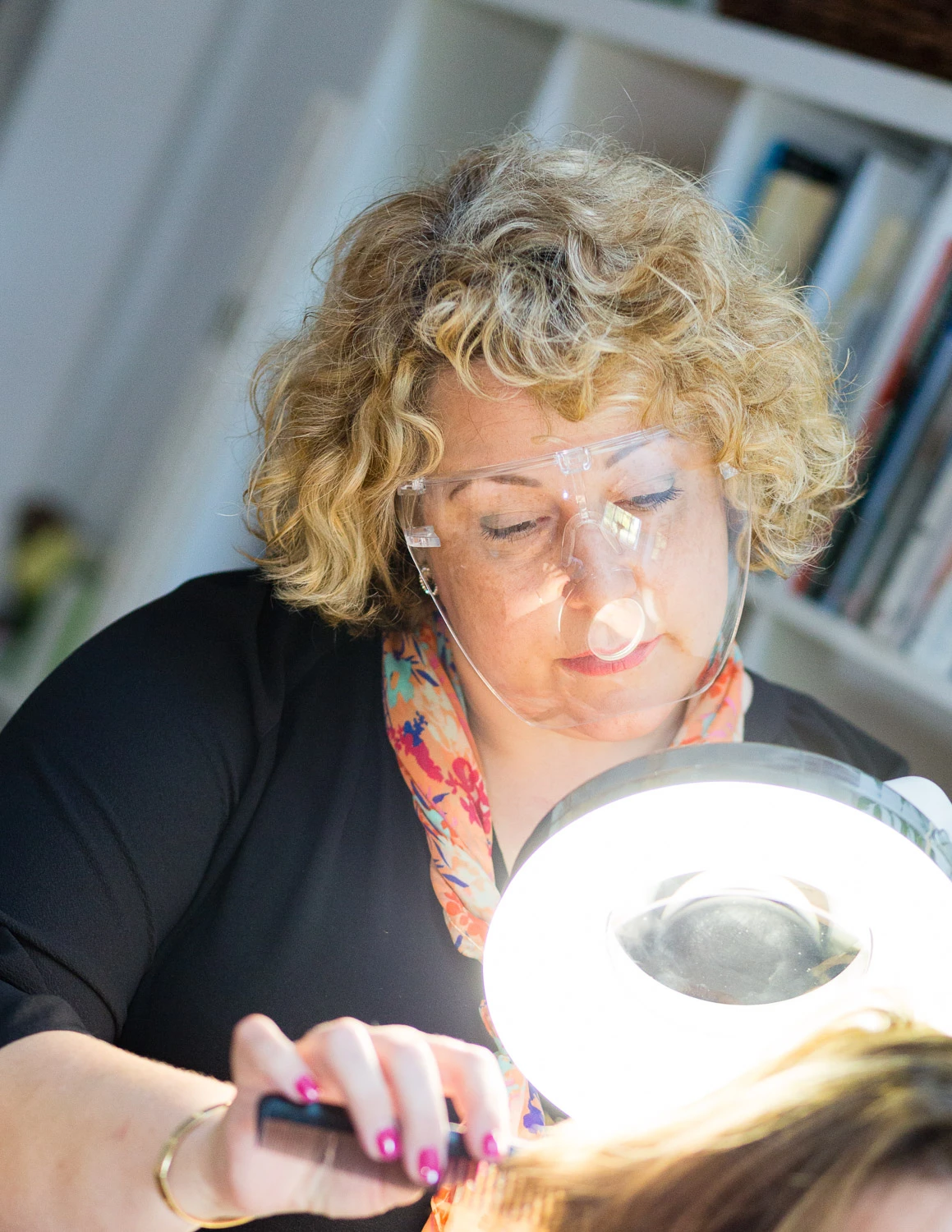
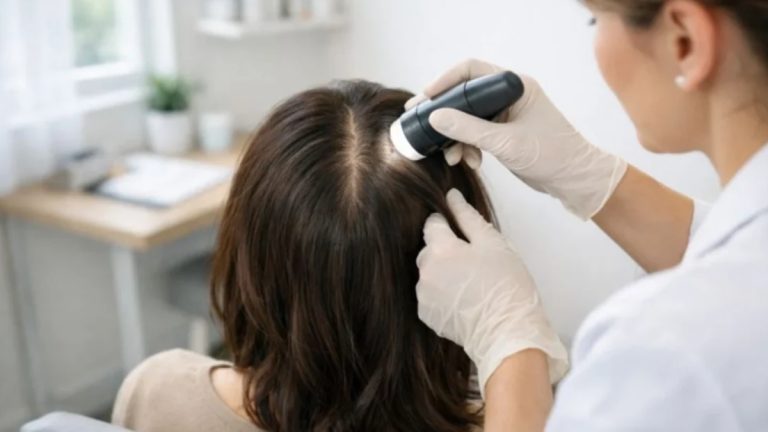
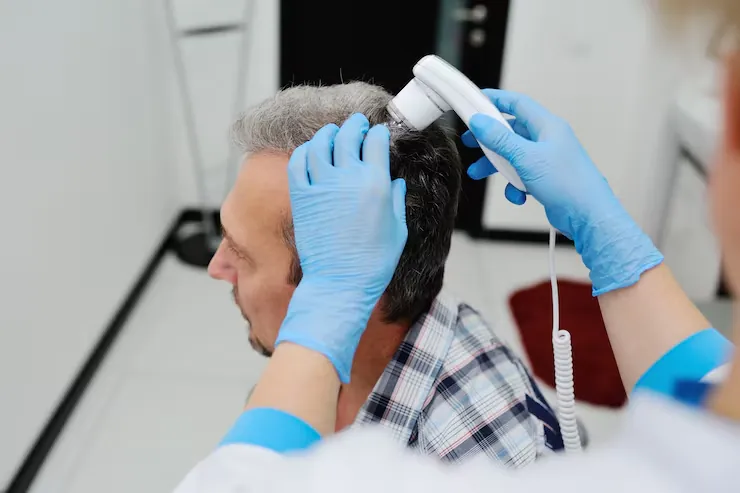
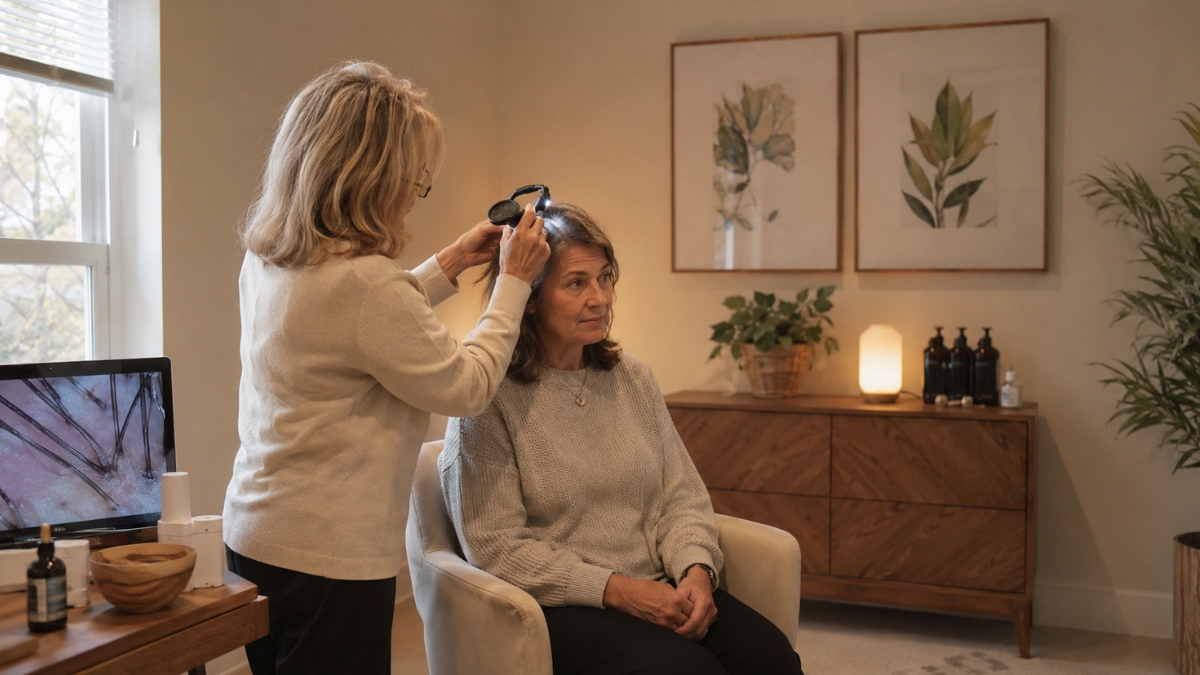
At Sussex Hair Clinic in Forest Row, Consultant Trichologist Shuna Hammocks reviews when the symptoms began, your health history, medicines, stress, hair-care practices and recent product exposure. The scalp and hair are then examined under magnification for redness, scale, follicle changes, breakage and the pattern of loss.
Blood tests or supplements are not suggested automatically. They should only be considered when the consultation history and clinical findings indicate that they may be relevant. Guessing or taking unnecessary supplements can create further health risks without addressing the real cause.
For a complete consultation, call 07860 387 332 or make an appointment at Sussex Hair Clinic
Frequently Asked Questions
Can an itchy scalp cause permanent hair loss?
Usually not. However, some inflammatory or scarring scalp conditions can damage hair if left untreated.
Should I stop washing an itchy scalp?
Usually, no. Gentle washing can remove oil, scale and product build-up without causing a new hair-loss condition.
Can natural oils help?
Not always. Some oils and essential oils may irritate the scalp, so the cause of the itching should be identified first.
Clinical sources reviewed:
- This article was written and reviewed by Shuna Hammocks, Consultant Trichologist. Member of The Institute of Trichologists (MIT) – Reg No: 10060
- NHS guidance on hair loss, dandruff and ringworm; British Association of Dermatologists information on alopecia areata and inflammatory scalp disorders; Guy’s and St Thomas’ NHS guidance on scalp psoriasis.
- This article is for educational purposes. It does not provide a diagnosis or replace advice from your GP, dermatologist or another qualified healthcare professional.